Is your website prepared for Google’s AI-driven search evolution? With 68% of online experiences beginning with a search engine, but only 0.63% of searchers clicking results on page two, the stakes have never been higher.
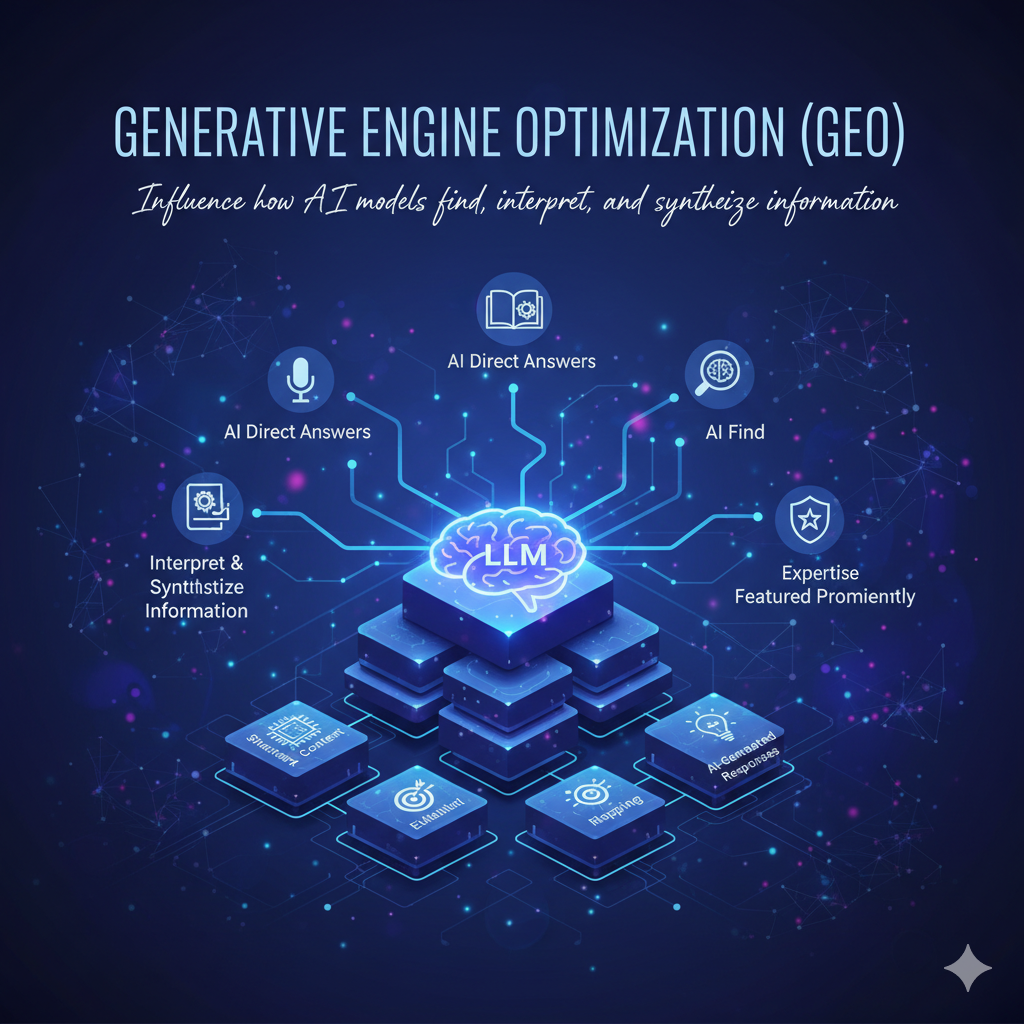
This post covers core pillars—semantic SEO, search intent mapping, E-E-A-T, Core Web Vitals, AI-aligned workflows, and multi-platform discoverability—so you can build topical authority and improve visibility across modern search systems.
This blog explores how a well-crafted custom website can strengthen your brand, build trust with your audience, and set you apart from the competition.
Quick bullets — what you’ll learn
Map content to user intent and topic clusters
Use AI for scale and humans for verification
Strengthen E-E-A-T through evidence and author credentials
Fix Core Web Vitals and technical crawlability
Optimize for platforms beyond Google
1. Understanding Search Intent in 2025
Search intent has evolved dramatically from simple keyword matching to sophisticated contextual understanding. Google’s algorithms now interpret not just what users type, but what they truly want to accomplish.
70% of search queries are now long-tail and conversational, reflecting how users naturally ask questions rather than typing fragmented keywords.
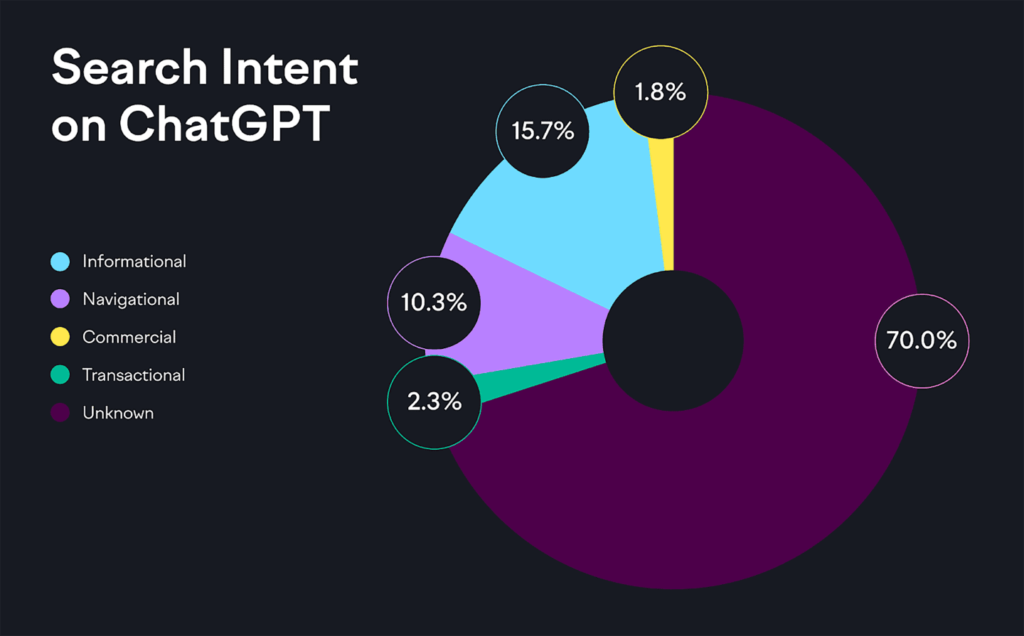
The Four Pillars of Search Intent
Modern SEO requires mapping your content to these distinct intent categories:
- Navigational Intent: Users seeking a specific website or page (e.g., “Colossus Digital Media login”)
- Informational Intent: Users looking for answers, guides, or explanations (e.g., “how does SEO work”)
- Commercial Investigation: Users researching before making decisions (e.g., “best SEO agency reviews”)
- Transactional Intent: Users ready to take action (e.g., “hire SEO consultant”)
Search intent has evolved dramatically from simple keyword matching to sophisticated contextual understanding. Google’s algorithms now interpret not just what users type, but what they truly want to accomplish.
Source:backlinks
How Google's NLP Revolution Changed Everything
Thanks to natural language processing advances like BERT and MUM, Google now understands:
- Contextual relationships between words
- Nuanced meaning beyond literal interpretation
- User location, device, and search history influences
- Semantic connections across multiple languages
💡 Pro Tip: Conduct Intent Analysis
Before creating content, analyze the top 10 search results for your target keyword. Identify patterns in:
- Content format (blog posts, product pages, videos)
- Content depth and angle
- SERP features (featured snippets, People Also Ask, etc.)
- User engagement signals
AI and SEO: Adapting to Algorithm Intelligence
Artificial intelligence is reshaping every aspect of SEO, from how content is created to how it’s ranked. Understanding this shift is critical for maintaining competitive advantage.
The Search Generative Experience (SGE) Impact
Google’s AI-powered search summaries are changing content discovery. To remain visible:
- Create content that answers questions completely and accurately
- Structure information for easy extraction and citation
- Build authority that makes your site a trusted source
- Optimize for featured snippets and knowledge panels
Leveraging AI Tools Strategically
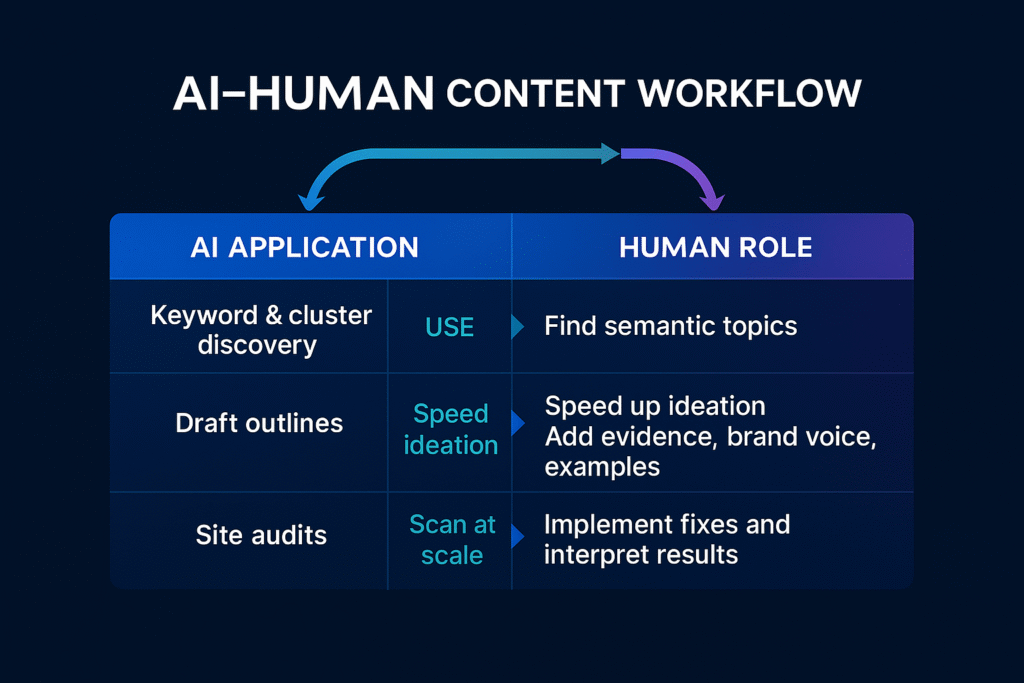
The key is using AI for efficiency while preserving irreplaceable human expertise:
| AI Application | Recommended Use | Human Enhancement Required |
|---|---|---|
| Keyword Research | Identify topic clusters and search patterns | Validate relevance, filter for intent |
| Content Ideation | Generate outline suggestions and angles | Add unique insights and expertise |
| Technical Audits | Scan for issues at scale | Prioritize fixes, implement solutions |
| Competitor Analysis | Identify content gaps and opportunities | Develop differentiated strategy |
The Golden Rule for AI Content
Never publish AI-generated content without substantial human review and enhancement. Google’s algorithms are increasingly sophisticated at detecting low-value automated content. Your competitive advantage comes from:
- Original research and data analysis
- Personal experience and case studies
- Expert interpretation and recommendations
- Brand voice and authentic perspective
Building Authority with E-E-A-T: The Trust Factor
Experience, Expertise, Authoritativeness, and Trust (E-E-A-T) form the foundation of Google’s content quality assessment. While not direct ranking factors, they profoundly influence how algorithms evaluate your site.
Experience: Demonstrating First-Hand Knowledge
The newest addition to Google’s quality framework emphasizes authentic, first-hand experience:
- Original Research: Conduct surveys, compile industry data, publish findings
- Case Studies: Document real implementations with measurable results
- Before/After Examples: Show actual outcomes from your methodologies
- Personal Insights: Share lessons learned from direct experience
Content featuring original data receives 3.5x more backlinks and ranks 27% higher than content without unique research, according to recent industry analysis.
Expertise: Showcasing Subject Matter Mastery
Demonstrate expertise through:
- Author Credentials: Display relevant qualifications, certifications, and experience
- Content Depth: Cover topics comprehensively with technical accuracy
- Industry Recognition: Highlight speaking engagements, publications, awards
- Professional Background: Link to LinkedIn profiles and professional portfolios
Authoritativeness: Building Industry Recognition
Authority develops through consistent quality and recognition:
- Quality Backlinks: Earn links from respected industry sources
- Brand Mentions: Generate unlinked citations across the web
- Media Coverage: Appear in industry publications and news outlets
- Thought Leadership: Publish on authoritative third-party platforms
Trust: Establishing Credibility and Safety
Trust signals reassure both users and search engines:
Trust-Building Checklist
- HTTPS security certificate installed and working properly
- Clear contact information including physical address and phone number
- Comprehensive privacy policy and terms of service
- Transparent about author identities and qualifications
- Customer reviews and testimonials prominently displayed
- Professional design free of intrusive ads
- Regular content updates with clear publication dates
YMYL Sites: Extra Scrutiny Required
If your content touches “Your Money or Your Life” topics (health, finance, legal, safety), Google applies heightened quality standards. Ensure:
Authors have verifiable credentials in their field
All factual claims are supported by authoritative sources
Content undergoes expert review before publication
Updates reflect current best practices and regulations
Technical SEO Excellence & Core Web Vitals
Technical optimization ensures search engines can efficiently crawl, index, and rank your content while delivering exceptional user experiences.
Core Web Vitals: Performance Metrics That Matter
Google’s Core Web Vitals directly impact rankings and user satisfaction:
| Metric | What It Measures | Target Threshold | Primary Solutions |
|---|---|---|---|
| Largest Contentful Paint (LCP) | Loading performance | < 2.5 seconds | Image optimization, server response time, CDN implementation |
| Interaction to Next Paint (INP) | Responsiveness | < 200 milliseconds | JavaScript optimization, reduce main thread blocking |
| Cumulative Layout Shift (CLS) | Visual stability | < 0.1 | Size attributes for media, font loading strategies |
Note: INP replaced First Input Delay (FID) as of March 2024, focusing on overall interaction responsiveness rather than just first interaction.
Essential Technical SEO Priorities
1. Mobile-First Excellence
- Responsive design that adapts to all screen sizes
- Touch-friendly navigation and buttons (minimum 48×48 pixels)
- Readable text without zooming (minimum 16px font size)
- Fast mobile load times (under 3 seconds)
2. Crawlability & Indexability
- Clean XML sitemap submitted to Search Console
- Properly configured robots.txt file
- Logical internal linking structure
- Canonical tags to prevent duplicate content issues
- Structured URL architecture
3. Structured Data Implementation
- Schema.org markup for rich snippet eligibility
- Article schema for news and blog content
- Product schema for e-commerce
- FAQ and HowTo schema for informational content
- Local Business schema for location-based businesses
4. International SEO
- Hreflang tags for multi-language sites
- Proper country targeting in Search Console
- Localized content for different regions
✅ Quick Technical Wins
- Enable Browser Caching: Reduce server requests for returning visitors
- Compress Images: Use WebP format for 25-35% smaller file sizes
- Minify CSS/JavaScript: Remove unnecessary characters and whitespace
- Implement Lazy Loading: Load images only when entering viewport
- Optimize Server Response: Aim for Time to First Byte (TTFB) under 200ms
Diagnostic Tools & Resources
- Google PageSpeed Insights: Comprehensive performance analysis with specific recommendations
- Search Console Core Web Vitals Report: Real user data from Chrome UX Report
- Lighthouse CI: Automated performance testing in development
- GTmetrix: Detailed waterfall analysis and optimization priorities
Need expert help? Our technical SEO audit services identify and resolve critical issues impacting your rankings.
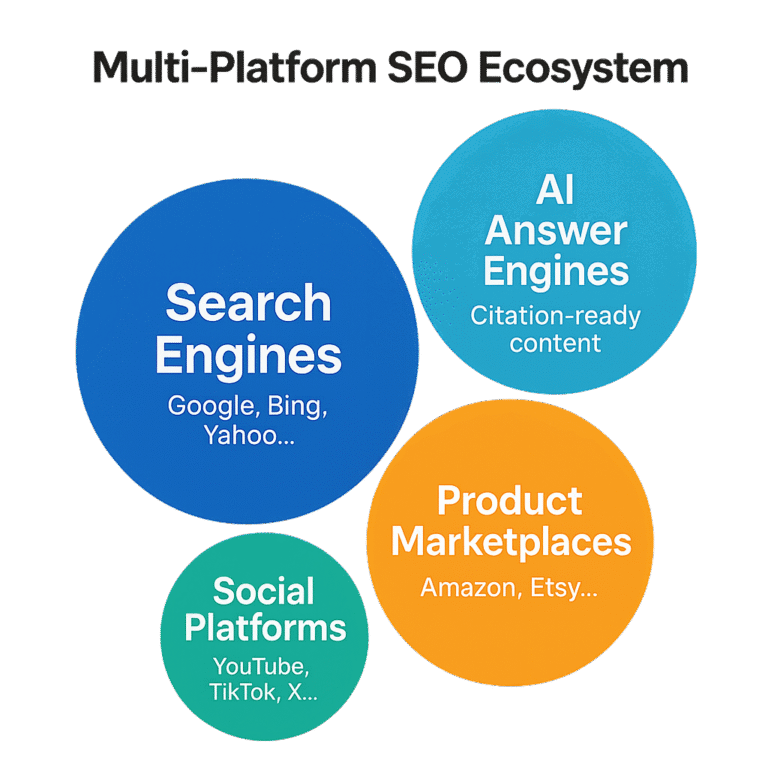
Beyond Google: Multi-Platform Search Strategy
The future of SEO extends far beyond traditional Google searches. Users now discover content across diverse platforms, each with unique optimization requirements.
YouTube: The World’s Second-Largest Search Engine
With over 2.7 billion monthly users, YouTube represents massive discovery potential:
- Keyword-Optimized Titles: Front-load primary keywords in the first 50 characters
- Detailed Descriptions: Include timestamps, links, and keyword-rich summaries
- Transcripts & Captions: Improve accessibility and provide searchable text
- Engagement Signals: Optimize for watch time, likes, comments, and shares
- Thumbnail Optimization: Create compelling, high-contrast custom thumbnails
E-Commerce Platform SEO
Amazon Optimization:
- Strategic keyword placement in titles and bullet points
- Backend search terms utilization
- A+ Content for enhanced product pages
- Review generation and management
- Competitive pricing and fulfillment optimization
AI Answer Engines
ChatGPT, Perplexity, Bing Chat, and similar platforms are changing information discovery:
- Citation-Worthy Content: Create authoritative, well-researched content that AI models will reference
- Clear Structure: Use headers, lists, and formatting that’s easy to parse
- Factual Accuracy: Ensure all information is verifiable and current
- Comprehensive Coverage: Address topics thoroughly to become a primary source
Social Search Optimization
TikTok & Instagram:
- Hashtag strategy for discoverability
- Keyword-rich captions and alt text
- Consistent posting schedule
- Engagement-focused content creation
Pinterest Visual Search:
- High-quality vertical images (2:3 ratio)
- Keyword-optimized pin descriptions
- Board organization and naming
- Rich Pins implementation
LinkedIn Article Optimization:
- Professional, in-depth content
- Strategic keyword integration
- Engagement through comments and shares
- Cross-promotion to company pages
Voice Search & Local SEO
Optimize for voice assistants and “near me” queries:
- Conversational Keywords: Target natural language, question-based queries
- Featured Snippet Optimization: Structure content to answer questions concisely
- Google Business Profile: Complete, accurate, regularly updated listing
- Local Citations: Consistent NAP (Name, Address, Phone) across directories
- Location Pages: Dedicated pages for each service area
Platform Prioritization Strategy
Don’t try to dominate every platform simultaneously. Instead:
- Identify where your target audience actively searches
- Start with 2-3 platforms aligned with your business model
- Master those before expanding to additional channels
- Repurpose content efficiently across platforms
Visual, Video, and Interactive Content Optimization
Modern search results increasingly favor engaging, multimedia content. Strategic visual optimization enhances both user experience and search visibility.
Strategic Visual Content Integration
Infographics for Link Building:
- Transform complex data into shareable visuals
- Include embed codes to encourage republishing
- Optimize file names and alt text with target keywords
- Submit to infographic directories and industry sites
Video Content Optimization:
- Hosting Strategy: Embed YouTube videos to benefit from dual platform exposure
- Video Transcripts: Provide full text for indexing and accessibility
- Video Schema Markup: Enable rich snippet eligibility in search results
- Engagement Optimization: Create compelling thumbnails and opening hooks
- Chapter Markers: Implement timestamps for easy navigation
Pages with video content receive 157% more organic traffic from search engines compared to pages without video, and users stay 2.6x longer on pages with embedded videos.
Interactive Elements That Boost Engagement
Calculators & Tools:
- ROI calculators for business services
- Pricing estimators for products
- Assessment tools and quizzes
- Comparison matrices and configurators
Interactive Data Visualizations:
- Dynamic charts that users can filter and explore
- Before/after comparison sliders
- Interactive timelines and process diagrams
- Customizable dashboards
Advanced Schema Markup Opportunities
Structured data enables rich results that increase click-through rates:
| Schema Type | Use Case | Potential Rich Result |
|---|---|---|
| Article Schema | Blog posts, news articles | Headline, image, publish date in results |
| HowTo Schema | Tutorial and instructional content | Step-by-step visual in results |
| FAQ Schema | Frequently asked questions | Expandable Q&A directly in SERPs |
| Video Schema | Video content | Video carousel, thumbnail preview |
| Review Schema | Product/service reviews | Star ratings in search results |
| Event Schema | Webinars, conferences, workshops | Event details with date/location |
Image Optimization Best Practices
- File Format Selection: Use WebP for photographs, SVG for logos and icons
- Compression: Aim for under 100KB per image without visible quality loss
- Descriptive Filenames: Use keywords instead of generic names (seo-strategy-2025.webp vs IMG_1234.jpg)
- Alt Text: Describe image content naturally with relevant keywords
- Responsive Images: Implement srcset for different screen sizes
- Lazy Loading: Delay loading off-screen images to improve initial page speed
Accessibility = Better SEO
Accessibility improvements benefit both users and search engines:
- Alt Text: Every image needs descriptive alternative text
- Video Captions: Closed captions for all video content
- Color Contrast: Minimum 4.5:1 ratio for text readability
- Keyboard Navigation: All interactive elements accessible without mouse
- Semantic HTML: Proper heading hierarchy and landmark elements
Performance vs. Engagement Balance
While multimedia content boosts engagement, it can impact page speed if not optimized properly. Follow these principles:
- Compress all images and videos before upload
- Implement lazy loading for below-the-fold content
- Use video hosting platforms rather than self-hosting large files
- Monitor Core Web Vitals after adding interactive elements
- Test on mobile devices to ensure smooth performance
Our web design and development team specializes in creating visually stunning, performance optimized websites.
Conclusion: Your Roadmap to SEO Success in 2025
The SEO landscape continues to evolve rapidly, but the fundamentals remain clear: create genuinely valuable content, optimize technical performance, build authentic authority, and adapt to how users actually search across platforms.
Key Takeaways:
- Search Intent First: Align every piece of content with what users truly want to accomplish
- AI as Assistant, Not Replacement: Leverage artificial intelligence for efficiency while preserving human expertise
- Build E-E-A-T: Demonstrate experience, expertise, authoritativeness, and trust in everything you publish
- Technical Excellence: Maintain fast, mobile-friendly, accessible websites that search engines love
- Platform Diversification: Extend beyond Google to YouTube, social platforms, and emerging search channels
- Multimedia Integration: Enhance engagement with optimized visuals, videos, and interactive content
Next Steps: Start Implementing Today
Don’t wait for the perfect strategy—begin with these immediate actions:
- Week 1: Run a technical SEO audit focusing on Core Web Vitals and mobile usability
- Week 2: Audit your top 10 pages for E-E-A-T signals and add missing credentials
- Week 3: Conduct search intent analysis for your primary keywords and adjust content accordingly
- Week 4: Implement schema markup on your most important pages
FAQ
A: Search intent alignment, E-E-A-T, Core Web Vitals, mobile-first optimization, quality backlinks, and comprehensive content that serves user needs.
A: AI improved semantic understanding and answer generation. Content should be structured, accurate, citation-ready, and enriched with human expertise.
A: Core Web Vitals measure loading (LCP), responsiveness (INP), and visual stability (CLS); achieving target thresholds improves user experience and supports ranking.
Ready to Dominate Search Rankings in 2025?
Let our expert team develop a custom SEO strategy tailored to your business goals. We’ve helped hundreds of businesses achieve first-page rankings and sustainable organic growth.